
From Worksheets to Student Thinking: How Phenomenal Science Notebooks Change Everything
Here's something most science teachers already know but rarely say out loud: worksheets are rarely really teaching tools. They're more management tools.
They keep students occupied. They're easy to grade. They make a quiet classroom look like a productive one. And on sub days? They're a lifesaver.
But quiet and productive are not the same thing. And if your students can Google their way through your worksheet in three minutes without thinking once about the actual science — that's a problem worth solving.
That's exactly why I developed the Phenomenal Science Notebook approach. Not to add more work to your plate, but to replace the stuff that isn't working with something that actually does.
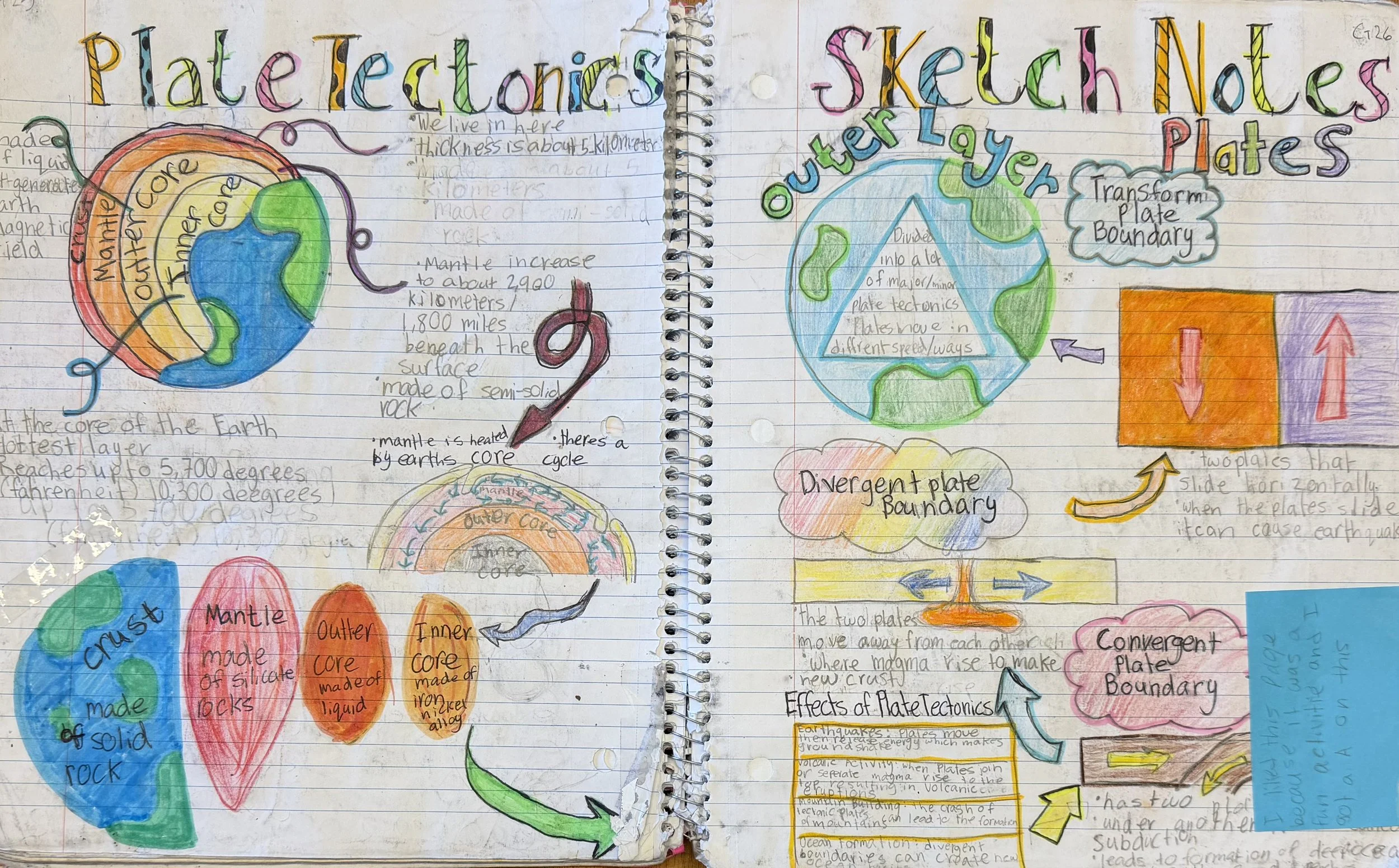
Junior High example of a two page spread in a notebook.
What's Wrong With Worksheets (Really)
The core issue with worksheets isn't that they're boring — though they often are. It's that they do the thinking for students.
A well-designed worksheet breaks everything down into digestible chunks, provides the vocabulary, scaffolds the structure, and asks students to fill in what's missing. Which sounds supportive. But what it actually does is remove the cognitive work that leads to real understanding.
And in a world where students have ChatGPT in their pockets, asking them to define mitosis or identify the independent variable on a worksheet isn't science instruction. It's busywork with a deadline.
NGSS science standards ask something different. They ask students to think like scientists: to observe phenomena, ask questions, make predictions, gather evidence, revise their thinking, and communicate their reasoning. Worksheets don't build those skills. Phenomenal Science notebooks do.
What Phenomenal Science Notebooks Actually Do
When implemented intentionally, a phenomenal science notebook isn't just a place to record information. It's where student thinking lives.
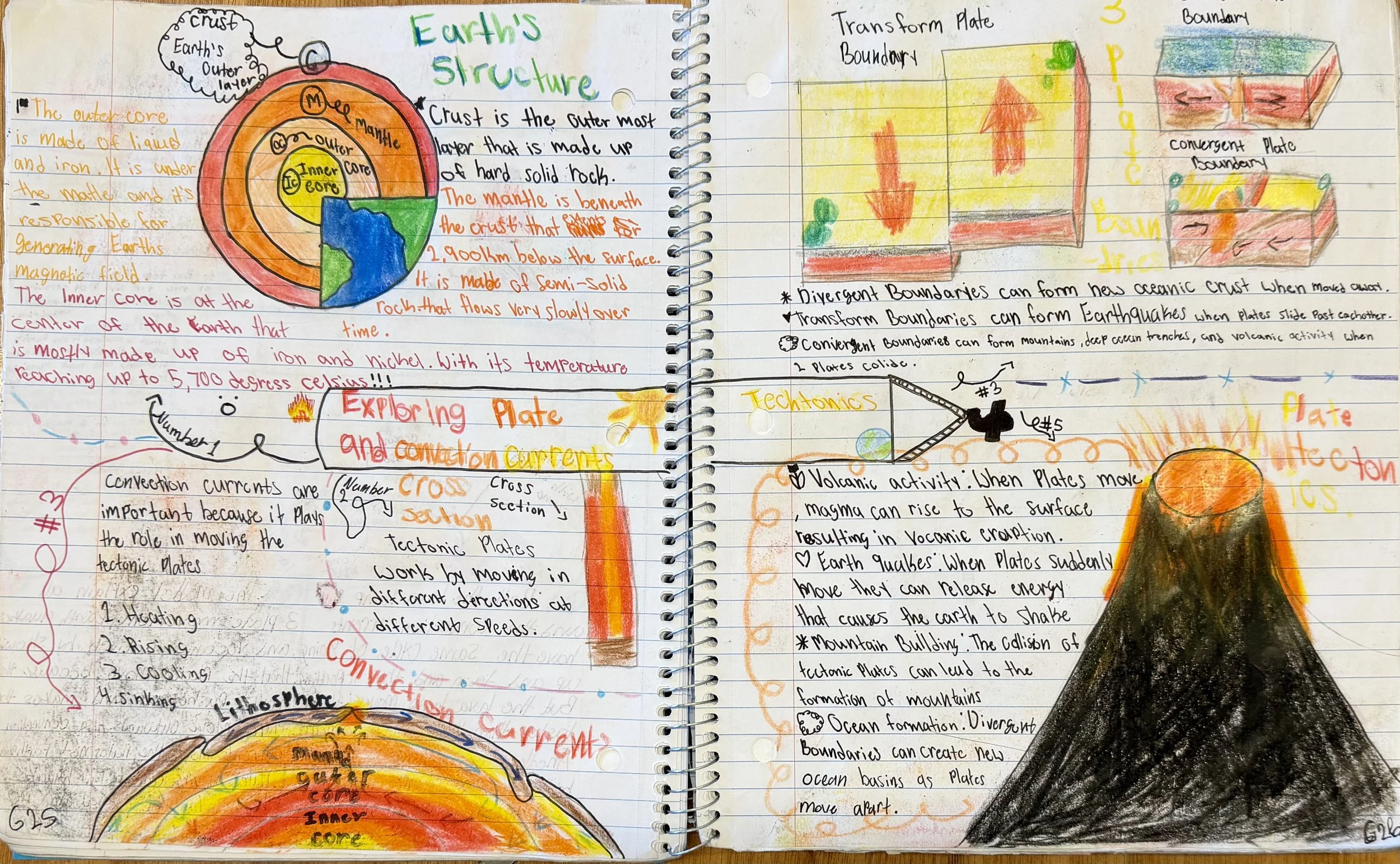
They make thinking visible. When students draw models, write explanations in their own words, and revise their thinking across a unit, you can actually see what they understand — and where the gaps are. That's formative assessment happening naturally, without a quiz.
They build scientific identity. There's a difference between a student who fills out a worksheet and a student who has a notebook full of their own hypotheses, diagrams, and reflections. The second student starts to see themselves as someone who does science. That shift matters.
They create access for every learner. Phenomenal Science Notebooks have what I call a "high ceiling, low floor." Every student can enter the learning — through drawing, labeling, sentence stems, or their home language — while advanced students can push deeper without hitting an artificial limit. No one is stuck waiting for the right answer to appear in a blank.
They develop scientific literacy. Writing in science isn't a language arts skill. It's a disciplinary practice. When students have to organize evidence, explain their reasoning, or defend a claim in writing, they are doing exactly what scientists do. Worksheets give students a box to write in. Phenomenal Science Notebooks give them a voice.
They replace the paper avalanche. One notebook per student, per class. No more stacks of loose papers, no more mystery worksheets at the bottom of backpacks, no more "I lost it." Everything is in one place — which means students can actually reflect on and connect their learning over time.
"But I Don't Know Where to Start"
You don't have to overhaul everything at once. In fact, please don't.
Start with one unit. Pick the one where your worksheets feel the most hollow and ask: what if students generated this thinking themselves instead of filling it in?
Replace the vocabulary fill-in-the-blank with a template where students take their own notes and sketch their own diagrams.
Replace the post-lab question sheet with an open prompt: What did you notice? What do you still wonder?
Replace the guided notes with a blank page and a driving question.
The goal isn't a perfect notebook on day one. The goal is getting students to do more of the intellectual heavy lifting — and watching what happens when they do.
What Teachers Tell Me
Teachers who make the shift to phenomenal science notebooks consistently notice the same things: students start asking better questions, they remember more across the year, and they actually care about their notebooks in a way they never cared about worksheets. Because it's theirs.
One teacher told me her students started flipping back through their notebooks unprompted, making connections to new content. That's metacognition. That's deep learning. And it didn't require a special app or a new curriculum — just a shift in what students do with their thinking.
Ready to Make the Shift?
If you're curious about bringing interactive phenomenal science notebooks into your classroom, here's where to start:
Phenomenal Science Notebooks Training — My signature self-paced training that walks you through the complete notebook system: sketchnoting, templating, and building lessons that move students away from worksheets and toward real thinking. Includes the 150-page interactive workbook.
Sketchnote Bootcamp — A done-for-you student training that teaches your class how to sketchnote in about 90 minutes. Click through the slides; your students do the work.
The eBook— A practical starting guide covering notebook setup, sketchnote basics, template design, and classroom strategies. A great first step if you want to explore before committing to the full training.
School & District PD — Bring the notebook approach to your team. I work directly with schools and districts to provide hands-on, strategy-rich professional development that translates to real classrooms, not just theory.
Phenomenal Science Notebooks aren't just a better filing system for student work. They're a fundamentally different vision of what science class can look like — one where student thinking is the point, not the byproduct.
If you're ready to see what your students are actually capable of, I'd love to help you find out!